The Docomo one, and the cheap one
GigSky in Japan
GigSky is the only eSIM we can link that publishes an NTT Docomo agreement, and it happens to be the cheapest 10GB on the site. That combination is rare enough to make it the default pick.
Every GigSky Japan plan USD, checked September 2026
| Plan | Price | Per GB | Notes |
|---|---|---|---|
| 100MB / 7 days | free | — | No card required. The only free trial in this comparison. |
| 1GB / 7 days | $2.99 | $2.99 | Cheapest 1GB for Japan. Airalo's is $4.00 and lasts three days. |
| 3GB / 15 days | $7.49 | $2.50 | Cheapest 3GB we can link, and fifteen days is a real trip. |
| 5GB / 30 days | $10.29 | $2.06 | Airalo's 5GB is $10.00 but expires in seven days. |
| 10GB / 30 days | $16.79 | $1.68 | Cheapest 10GB on the site, $1.21 under Airalo's 30-day pack. |
| 3.5GB/day / 1 day | $3.49 | $1.00 | Daily-cap packs, not sold as "unlimited". The ceiling is printed in the plan name, which is the honest version of what the others call unlimited. |
| 3.5GB/day / 3 days | $10.49 | $1.00 | |
| 3.5GB/day / 7 days | $24.49 | $1.00 | |
| 3.5GB/day / 15 days | $44.99 | $0.86 |
Note what is missing: there is no 20GB or 30GB GigSky plan for Japan. The ladder stops at 10GB and jumps to the daily packs. If you want a big bundle, Airalo's 20GB at $24.00 or Yesim's 30GB at $38.35 is where to look. Prices in USD, checked September 4, 2026.
GigSky is the only eSIM we can link that publishes Docomo and in Japan that is the argument
Japan has three networks that get resold to travel eSIMs, and they are not equivalent. NTT Docomo has the deepest rural and mountain coverage in the country. KDDI is close behind and excellent along the tourist spine. SoftBank is a city network that thins out first.
GigSky's published Japan coverage record lists NTT Docomo and SoftBank. Airalo lists KDDI and SoftBank. Yesim lists KDDI and Docomo. Saily publishes nothing at all. So among the four brands whose links pay this site, GigSky and Yesim are the two Docomo routes, and GigSky is the cheaper and better-reviewed of them.
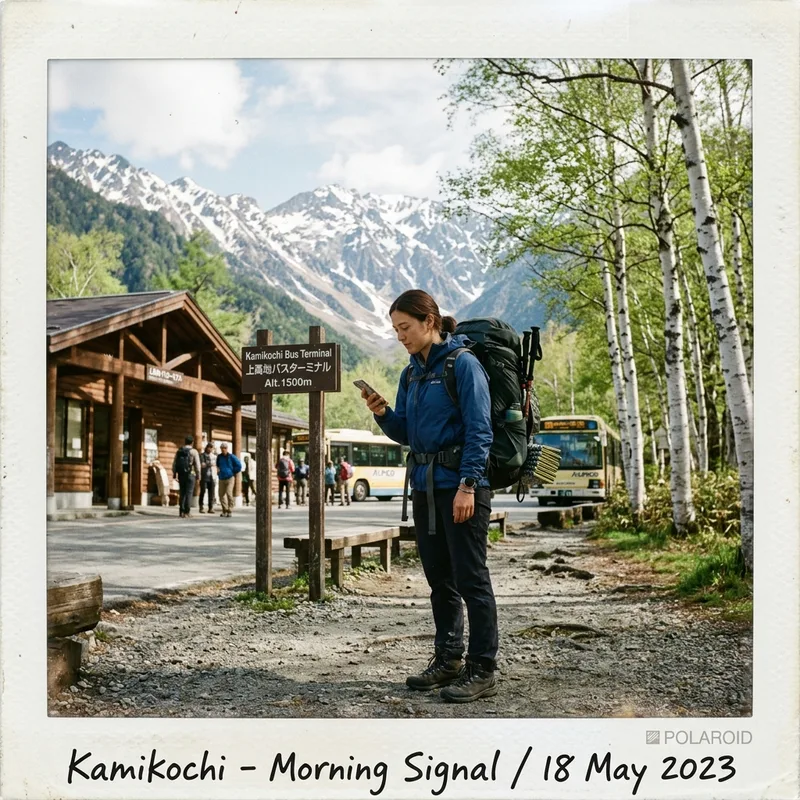
Where that matters in practice: Kamikochi and the Japanese Alps, the forest sections of the Nakasendo between Magome and Tsumago, rural Hokkaido and the Daisetsuzan parks, the Sanriku coast in Tohoku, the mountain temples of the Shikoku pilgrimage, and the small islands. In Tokyo, Kyoto and Osaka it makes no difference whatsoever and you should buy on price.
If any part of your route leaves the corridor, this is the whole decision, and it costs $16.79 for 10GB rather than $18.00 for a plan without Docomo.
See GigSky Japan plans Read the network breakdownThe free 100MB is the most useful thing GigSky does and nobody else offers it
GigSky gives away 100MB valid for seven days, with no card and no trial that quietly turns into a subscription. In a country where the network under the eSIM is the entire question, that is worth more than it sounds.
Use it as a diagnostic. Install it alongside whatever else you buy, land at Narita or Kansai, switch to the GigSky line and look at what the phone attaches to. If it holds a usable signal at a ryokan in Nagano, you have learned something no comparison page can tell you, including this one.
100MB also covers the airport and the train into the city if you are careful with it, which makes it a decent emergency reserve for the evening your main plan runs out.
GigSky against the other three where it wins and where it stops
| GigSky | Airalo | Saily | Yesim | |
|---|---|---|---|---|
| 1GB | $2.99 / 7d | $4.00 / 3d | $3.99 / 7d | $4.30 / 30d |
| 3GB | $7.49 / 15d | $8.00 / 7d | $7.99 / 30d | none |
| 5GB | $10.29 / 30d | $10.00 / 7d | $10.99 / 30d | $10.23 / 30d |
| 10GB / 30 days | $16.79 | $18.00 | $17.99 | $18.59 |
| 20GB or more | none | $24.00 / 15d | $24.99 / 30d | 30GB $38.35 |
| Japanese network | Docomo + SoftBank | KDDI + SoftBank | not published | KDDI + Docomo |
| Unlimited | no, 3.5GB/day packs | 3GB/day, 1 Mbps after | 5GB/day | cap not published |
| Free trial | 100MB / 7 days | no | no | no |
| Trustpilot | 4.3 · 6,217 | 4.1 · 41,885 | 4.7 · 30,542 | 4.3 · 2,942 |
The pattern is clean. At every size GigSky actually sells, it is the cheapest or within thirty cents of it, on the best network in the country, with a review record nobody has raised a flag about. Then it simply stops at 10GB.
For a one to two week trip using under ten gigabytes, which is most people, this is the best combination on the page. For a month of remote work, or for anyone who intends to hotspot a laptop daily, the missing big bundle and the missing unlimited plan both start to hurt, and Saily is the better answer.
What GigSky does not sell and what to buy instead
No true unlimited. GigSky's answer to unlimited is a 3.5GB-a-day pack with the cap in the name. That is more honest than most of this industry, and it is also expensive: $24.49 for a week works out at a dollar a gigabyte if you use every drop, and far worse if you do not. Saily's unlimited at $28.99 for seven days gives you 5GB a day for four dollars more.
Nothing above 10GB. If you need 20GB, Airalo is $24.00 over fifteen days and Saily is $24.99 over thirty. Buying two GigSky 10GB packs at $33.58 is worse than either.
No phone number. Like every travel eSIM here, GigSky is data-only. Japanese restaurant booking systems and rental car desks want a domestic number and will not take a foreign one. The phone number page covers the three real options.
Buying and activating GigSky and one pricing quirk
- Buy on the GigSky website at home on wifi. Prices in the app vary with the region setting on your account, so check it is showing USD before you compare anything against the tables on this page.
- Take the free 100MB first. Install it, keep it, and use it as your arrival diagnostic. It costs nothing and expires on its own.
- Install the paid profile before you fly. It does not start counting until it connects in Japan, so there is no reason to wait and every reason not to be doing this at the gate.
- On landing: switch the GigSky line on for data, home line on for calls with data roaming off. If nothing connects within five minutes, set network selection to manual and choose NTT Docomo. Full setup and fixes.
Buy GigSky if, skip it if the short version
Buy it if
- Your route touches the Alps, Hokkaido, Tohoku, Shikoku or the small islands, where Docomo is the only reliable network.
- You want 1GB, 3GB, 5GB or 10GB, where it is the cheapest or near enough.
- You would rather test the signal for free before committing a cent.
- You are travelling in a country where you cannot read the error messages, and a brand with a clean 4.3 across 6,217 reviews is worth something.
Skip it if
- You need 20GB or more. GigSky does not sell it for Japan at any price.
- You want genuine unlimited. The daily packs are expensive per day and cap at 3.5GB.
- You are staying in Tokyo, Kyoto and Osaka only, where Airalo costs about a dollar more and the network difference is invisible.
- You want the absolute best network access in Japan and do not care who earns from it, in which case Ubigi holds Docomo and KDDI.
GigSky Japan questions short answers
Which network does GigSky use in Japan?
GigSky's published Japan coverage record lists NTT Docomo and SoftBank. Docomo is the network with the deepest rural and mountain coverage in the country, and GigSky is the only brand we can link that publishes an agreement with it. Yesim publishes Docomo too. Airalo rides KDDI and SoftBank, and Saily publishes nothing.
Is GigSky good for Japan?
Yes, for most trips. It is the cheapest 1GB, 3GB and 10GB we can link, it is on Docomo, it holds a 4.3 Trustpilot score across 6,217 reviews, and it gives away 100MB so you can test it before paying. It is the wrong choice if you need more than 10GB or want genuine unlimited data.
Does GigSky have unlimited data for Japan?
No. GigSky sells 3.5GB-per-day packs and does not call them unlimited, which is more honest than most of the industry. A week is $24.49 and fifteen days is $44.99. If you want a bigger daily allowance, Saily publishes 5GB a day and Airalo publishes 3GB a day plus 1 Mbps after it.
How much is GigSky 10GB for Japan?
$16.79 for 30 days, checked September 4, 2026. That is the cheapest 10GB in this comparison: Saily is $17.99, Airalo is $18.00 and Yesim is $18.59, all for the same 30 days. Ubigi is $16.50 and we earn nothing from it.
Is the GigSky free trial really free?
Yes. 100MB valid for seven days, no card, no subscription that starts afterwards. It is the only free trial among the brands we can link, and the most useful thing you can do with it is find out which Japanese network your phone actually attaches to when you land.
Docomo access for $16.79
10GB over 30 days on NTT Docomo and SoftBank, the cheapest 10GB in this comparison, with 100MB free first so you can prove it works before you spend anything.
See GigSky Japan plansSources & freshness: Plan prices from GigSky's Japan listing via esimdb on September 4, 2026, in USD, before promo codes. Network permissions from GigSky's published Japan coverage record on the same date. Trustpilot 4.3 across 6,217 reviews, checked September 4, 2026. We have not run our own speed tests in Japan and will say so until we have. How we test.